
In powder production—especially in the preparation of ultrafine powders—overgrinding and agglomeration are two common challenges. Overgrinding refers to a situation in which qualified fine particles continue to be ground. This leads to energy waste, a broader particle size distribution, and, in some cases, degraded product performance. Agglomeration occurs when ultrafine particles attract each other through van der Waals forces, electrostatic forces, or liquid bridge forces. As a result, secondary particles are formed, which negatively affect powder dispersion, flowability, and end-use performance. These issues not only reduce production efficiency but also increase energy consumption and operating costs. As a highly efficient dry classification device, 空気分級機 粒子を正確に分離することでこれらの問題に効果的に対処できます。.
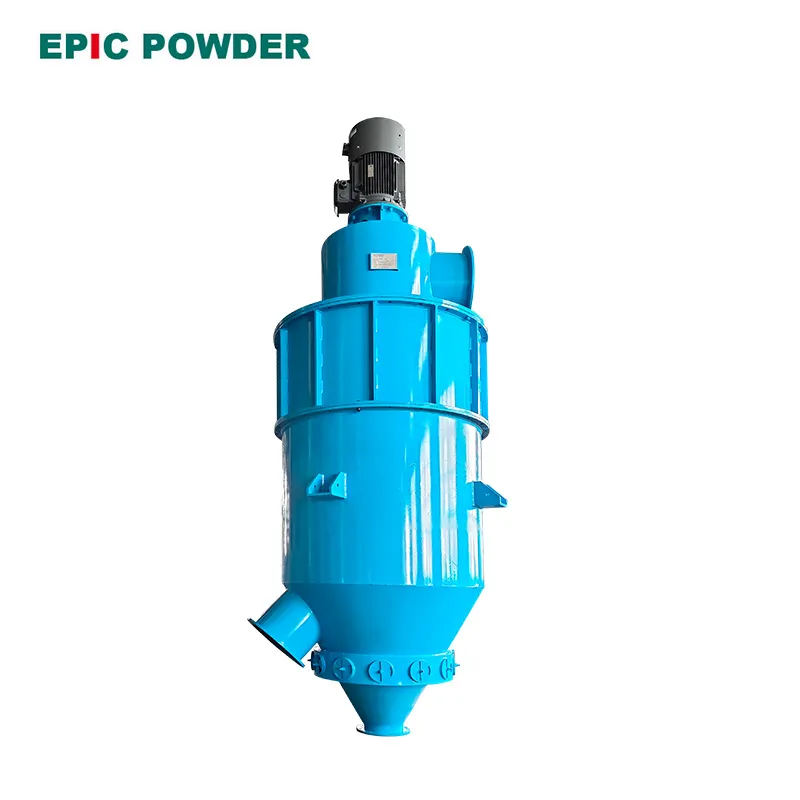
粉体製造における「過剰粉砕」と「凝集」の原因
During mechanical grinding processes (such as ball milling or jet milling), particles become progressively finer as grinding time increases. However, once a certain fineness is reached, a grinding equilibrium phenomenon appears: while fine particles increase, ultrafine particles begin to agglomerate. The rate of particle size reduction gradually balances with the rate of agglomeration. If grinding continues beyond this point, particle size may no longer decrease and may even increase due to agglomeration.
一方、適格な微粉末が時間内に分離されない場合、繰り返し粉砕ゾーンに戻り、過剰粉砕につながります。.
These phenomena are particularly prominent in the production of ultrafine powders such as calcium carbonate, quartz, and silicon carbide, significantly affecting product quality and throughput.
空気分級機の動作原理
An air classifier separates particles based on the combined effects of airflow and centrifugal force. Common types include turbo (dynamic) air classifiers and cyclone-based systems. A typical turbo air classifier consists of a feed dispersing plate, a classification wheel (rotor cage), guide vanes, and a secondary air inlet.
動作原理:
材料は気流に乗って分級ゾーンに入ります。高速回転する分級ホイールによって発生する遠心力と気流の抗力の作用により、微粒子は分級ホイールの隙間を通過して捕集され、粗粒子はハウジング壁に向かって投げ出され、粉砕ゾーンへ落下します。二次気流は粗粒子をさらに洗い流し、混入した微粒子を分散させ、キャリーオーバーを低減します。.
ローター速度や空気流量などのパラメータを調整することで、カットサイズを正確に制御(通常、D97 ≈ 3〜150 μm)し、狭い粒度分布を実現できます。.
どうやって 空気分級機 「過剰粉砕」と「凝集」を解決する“
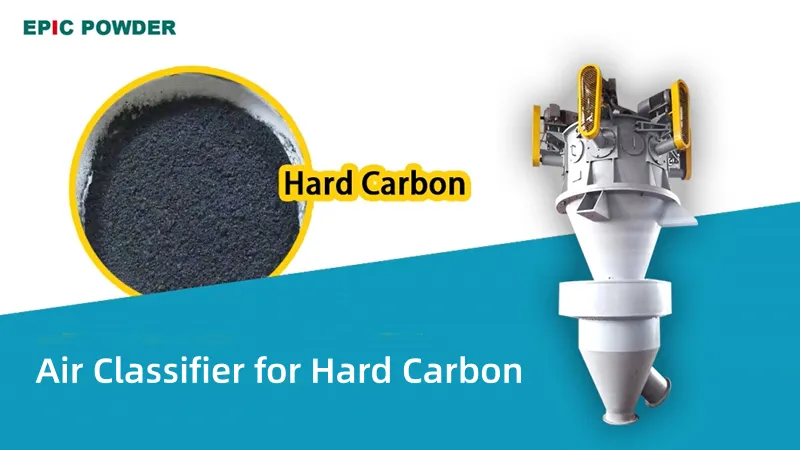
過剰研削の防止
- 空気分級機は、粉砕装置(ボールミルやジェットミルなど)と直列に接続され、閉回路システムを形成します。粉砕後、原料は分級機に入り、適切な微粉は直ちに分離・回収され、粗粒子は粉砕ゾーンに戻ってさらに粉砕されます。これにより、微粉が繰り返し粉砕されることを防ぎ、過剰粉砕を回避し、粉砕効率を向上させ、エネルギー消費を削減します。.
- オープン回路システムと比較すると、クローズド回路システムでは過剰な粉砕が大幅に削減され、より狭い粒度分布が生成されます。.
集積の緩和
- 分級中の気流分散と二次空気洗浄により、弱い凝集体を分解し、粉末の分散性を向上させます。.
- 微粒子を適時に分離することで、粉砕ゾーン内での滞留が長時間防止され、凝集の可能性が低減します。.
- 最新の空気分級機は、分散をさらに強化し、「フィッシュフック効果」(細かい粒子を粗い粒子として誤分類すること)を軽減するために最適化された設計(改良された供給分散機や乱流コーンなど)を備えています。.
さらに、負圧操作と無塵システム設計により、クリーンかつ環境に優しい生産を実現します。.
アプリケーションの利点と重要な考慮事項
Air classifiers are widely used in non-metallic minerals, chemicals, pharmaceuticals, and battery materials. Their main advantages include:
- 60%~90%の効率による高い分類精度
- 多段階分級により複数の粒子サイズ分画を生成可能
- 省エネ、低騒音、簡単な操作
実際には、ローター回転数や空気流量などの運転パラメータは、材料特性(水分含有量や流動性など)に応じて最適化する必要があります。必要に応じて、添加剤を使用することで、凝集をさらに防止することができます。.
空気分級機を備えた閉回路式粉砕システムの構築は、粉体製造における過剰粉砕と凝集の問題を解決する最も効果的な方法の一つです。製品の品質と歩留まりを向上させると同時に、環境に優しく効率的な製造を可能にし、粉体産業の高精度化と精製を促進します。.
結論
粉体処理の分野では、, 青島エピック粉体機械 EPIC Powderは、超微粉体処理装置の専門サプライヤーです。同社の先進的な空気分級機には、HTSシリーズターボ分級機、ITCシリーズ垂直分級機、 CTCシリーズ空気分級機. これらのシステムは、高い分級精度、狭い粒度分布、優れた分散性能で知られています。.
EPIC Powderは、閉回路粉砕プロセスに空気分級機を統合することで、過剰粉砕と凝集を効果的に排除します。同時に、エネルギー消費量の削減、製品品質の向上、そして環境に優しい生産を実現します。.
EPIC Powder の分類装置を選択すると、製造業者はより効率的で洗練された粉体処理の時代へと進むことができます。.
読んでいただきありがとうございます。この記事がお役に立てれば幸いです。ぜひ下のコメント欄にご意見をお寄せください。また、ご質問等ございましたら、Zeldaのオンラインカスタマーサポートまでお問い合わせください。
— 投稿者 エミリー・チェン