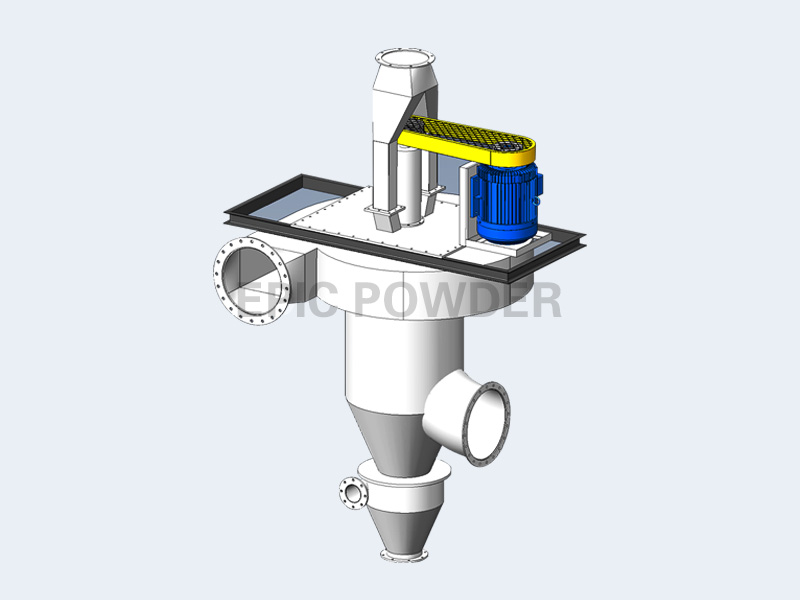
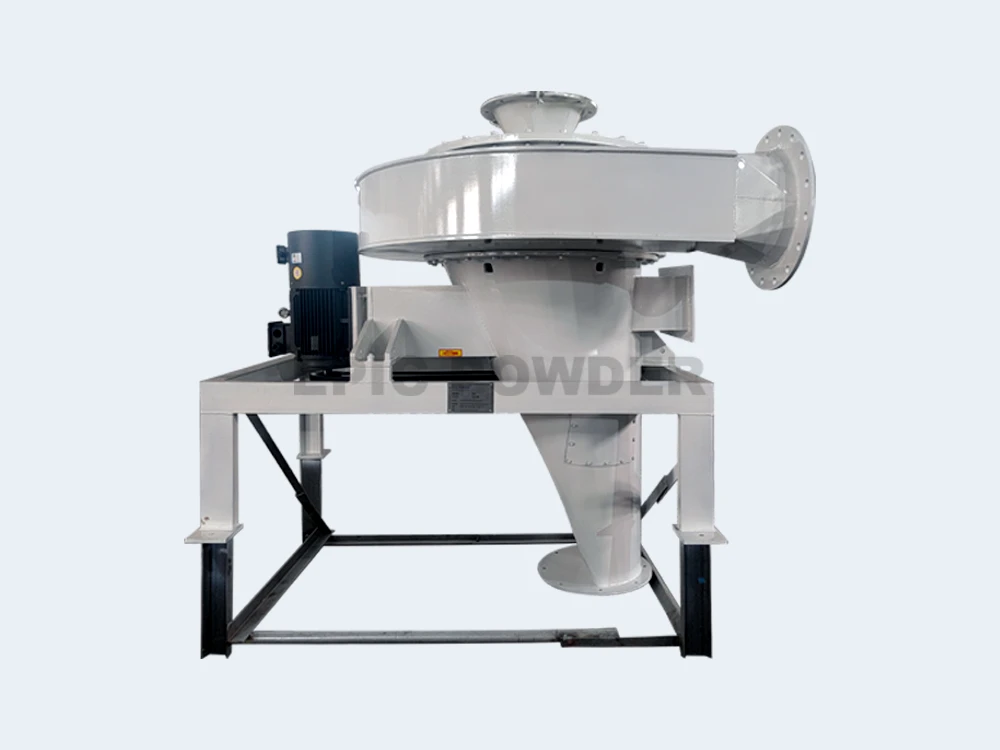
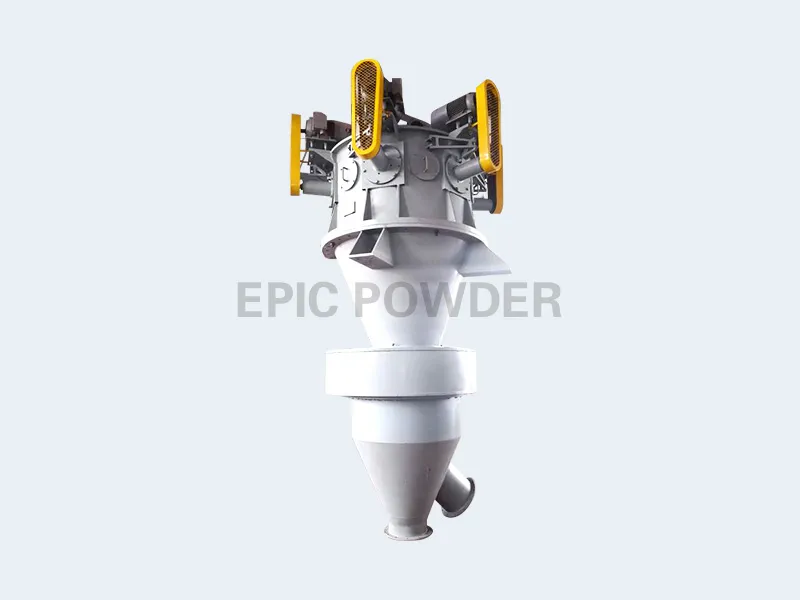
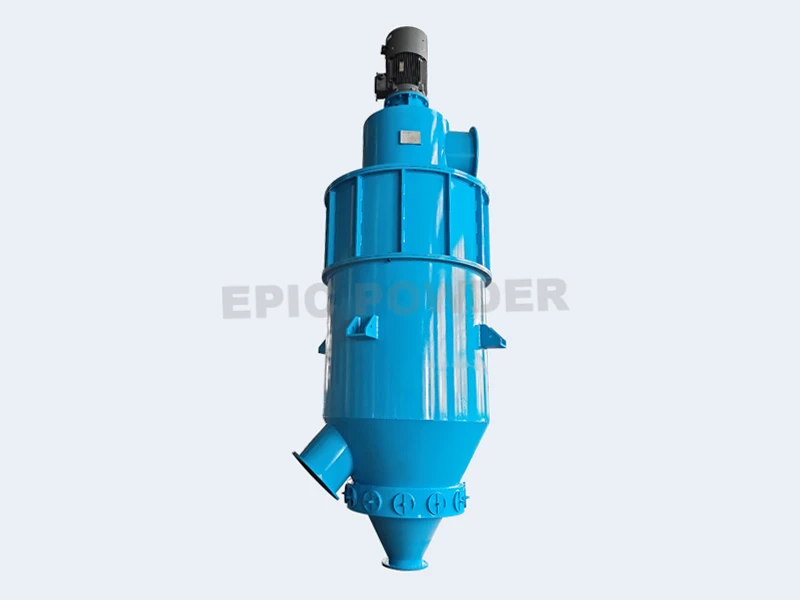
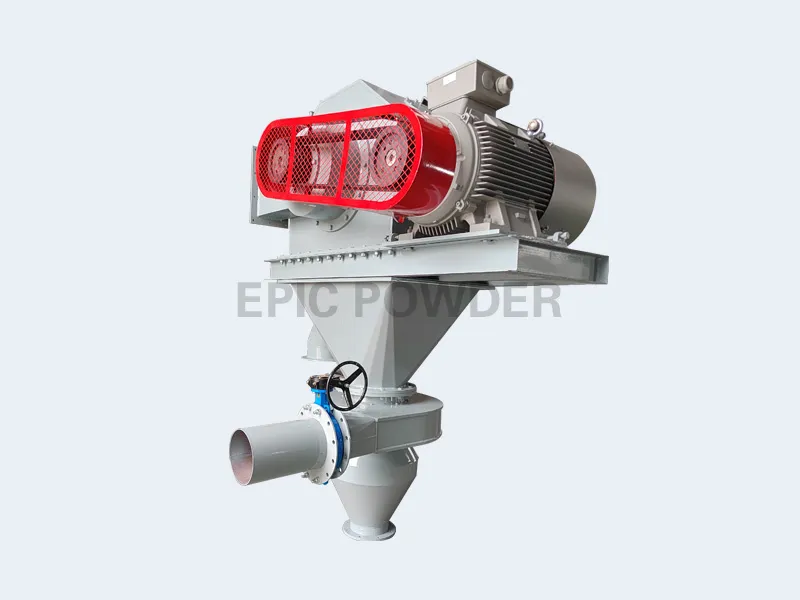
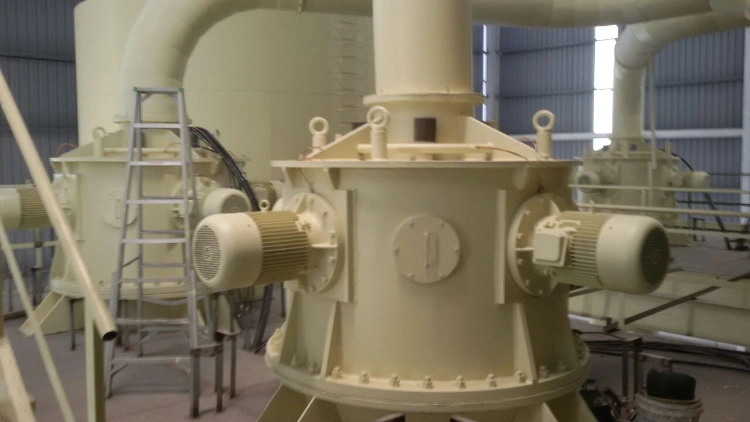
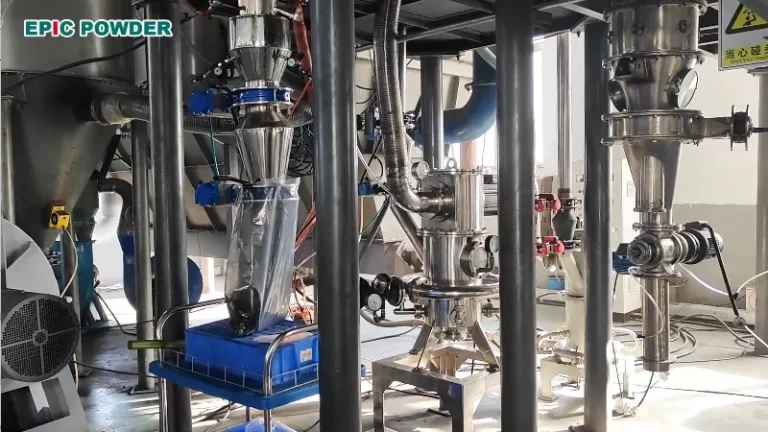
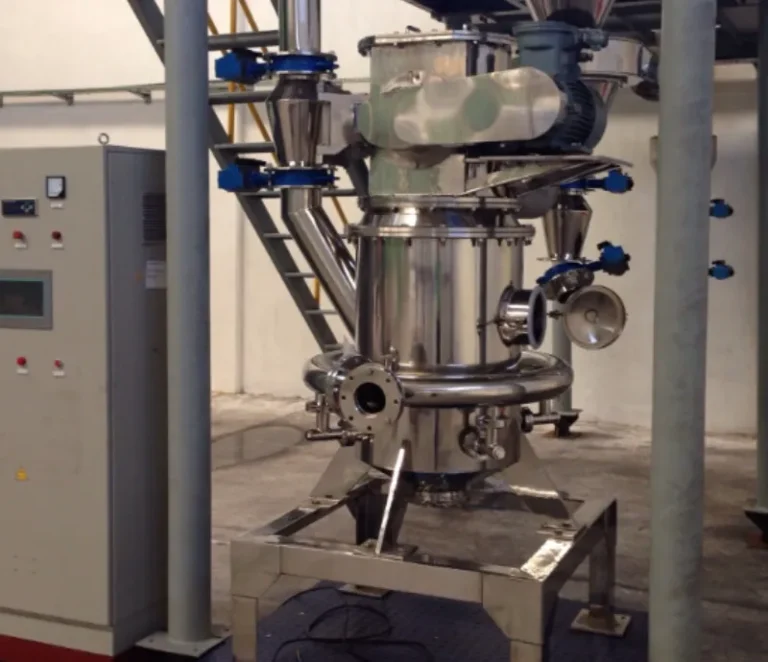
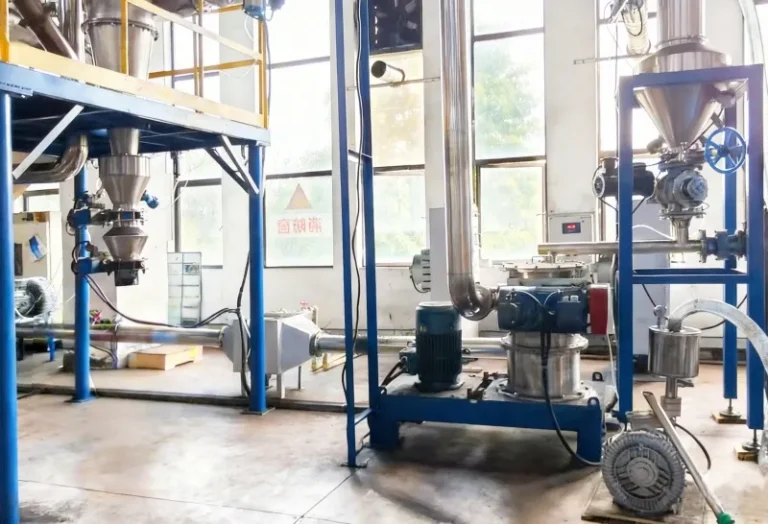
MBS series air classifier is jointly designed by our German experts and British experts, and is specially used for efficient dry classification of D97: 8-200 micron powder. The classifier, cyclone collector, dust collector and induced draft fan form a complete classification system. The feeding port of the classifier is at the top of the classifier. The feed enters the classifier from the top inlet under the action of gravity, and then falls onto the centrifugal dispersion disc of the classifying wheel. The material will be evenly dispersed, dispersed to the baffle ring and down into the grading area. Classification air enters the scroll housing, passes the guide vanes, and inwards to the classification wheel. The fine powder is carried by the airflow into the classifying wheel, and then enters the cyclone collector or dust collector with the airflow, while the coarse powder will be repelled by the centrifugal force of the classifying wheel and fall into the lower body of the classifier.
MBS series air classifier is jointly designed by our German experts and British experts, and is specially used for efficient dry classification of D97: 8-200 micron powder. The classifier, cyclone collector, dust collector and induced draft fan form a complete classification system. The feeding port of the classifier is at the top of the classifier. The feed enters the classifier from the top inlet under the action of gravity, and then falls onto the centrifugal dispersion disc of the classifying wheel. The material will be evenly dispersed, dispersed to the baffle ring and down into the grading area. Classification air enters the scroll housing, passes the guide vanes, and inwards to the classification wheel. The fine powder is carried by the airflow into the classifying wheel, and then enters the cyclone collector or dust collector with the airflow, while the coarse powder will be repelled by the centrifugal force of the classifying wheel and fall into the lower body of the classifier.
Product Parameters
Parameter / Model
1
2
3
4
5
6
7
8
9
10
11
12
13
14
15
16
17
18
Drive power (kW)
5.5
11
15
22
37
45
75
110
132
160
185
220
280
320
380
4475
540
630
Air flow rate (m³/h)
2,800
4,700
8,600
15,200
23,400
31,000
49,000
74,000
107,000
150,000
190,000
237,000
288,000
344,000
402,000
469,000
536,000
606,000
Fineness D97 D₉₇ (µm)
8
9
10
13
14
16
18
20
25
27
28
29
31
33
34
35
37
38
Max. feed rate(t/h)
4
6.6
12.1
21.3
32.8
43
68
100
140
210
260
330
400
480
560
650
750
840
Note: The production capacity is closely related to the particle size, specific gravity, hardness, moisture and other indicators of the raw materials. The above is only for selection reference.