Lab Spiral Jet Mill MQP-Lab

Lab Spiral Jet Mill MQP-Lab

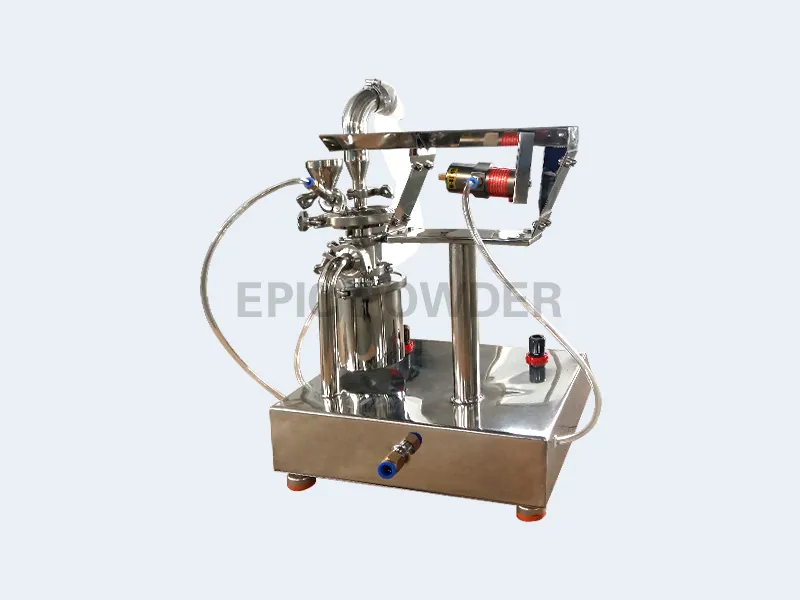
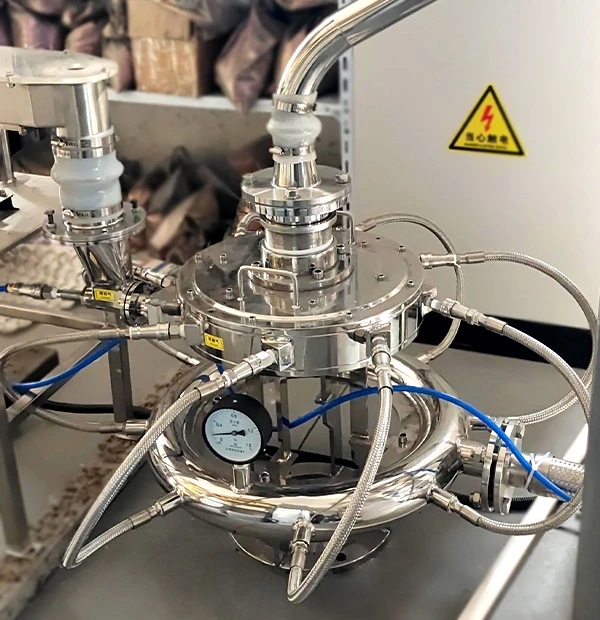
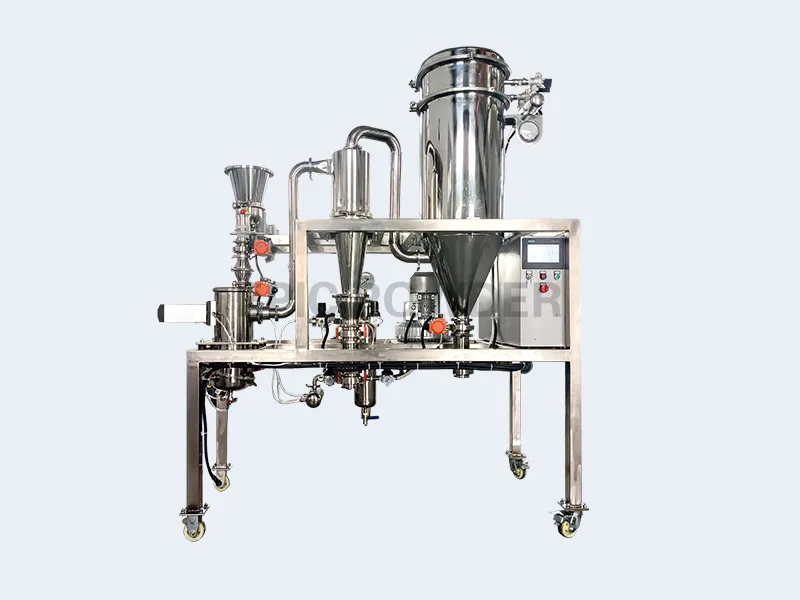
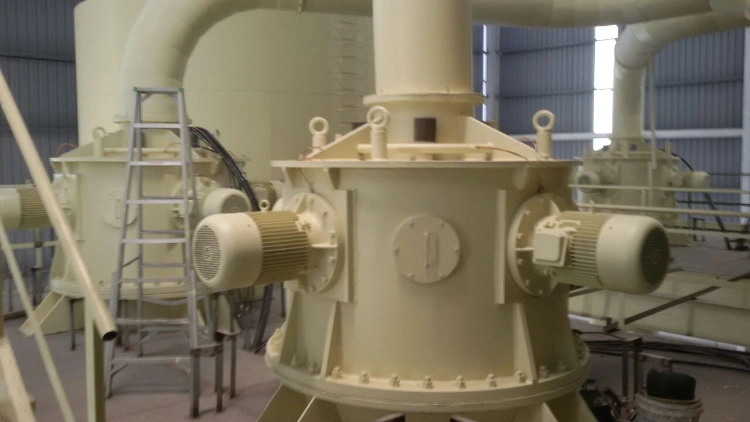
Compressed air or superheated steam or other inert atmosphere enters the gas distribution pipe from the feed gas injection port. Under the action of its own pressure, the gas passes through several nozzles arranged tangentially around the seat ring to generate high-speed jets and collides with the materials entering the grinding chamber. The feeding injector composed of hopper, feeding nozzle and Venturi tube is used as the feeding device. The material in the hopper is ejected to the Venturi tube by the jet stream from the feeding nozzle. In the Venturi tube, the material and the air flow are mixed and pressurized and enter the crushing chamber. The crushed material is brought to the center group tube by the air flow and passes through The stack pipes go axially into the center exhaust pipe up or down into the collection unit.

Lab Spiral Jet Mill MQP - Lab

Product features

  • One-time processing capacity can be as little as 100g, as much as 5-50kg/h.
  • Low installed power, low power requirement, < 10kW.
  • The product has a wide range of fineness, 300-2500 mesh at one time.
  • Easy to clean, easy to disassemble, easy to install, no dead angle inside the equipment.
  • When the equipment is operating, low noise, low temperature, and the impurity will not be mixed.
  • Small footprint, small size, simple and beautiful appearance.
  • The airtightness of the equipment is good, no dust, and the loss of samples is low.
  • Especially suitable for research and development and testing of new products in scientific research institutes, college laboratories, factory research institutes, and factory laboratories.
  •  

Working Principle

Compressed gas is used to pass the feeder ejector to bring the ground raw materials into the grinding chamber, and driven by the high-speed airflow from multiple nozzles, it is sprayed on the grinding wall in a tangential manner to achieve the effect of friction grinding. By adjusting the longitudinal depth of the grinding chamber, adjusting the grinding pressure or feeding speed, the fineness of grinding can be controlled. Compared with the Spiral Jet Mill, the controllability of the pulverization fineness is less.

Product Parameters

Model Feeding Size (mm) Particle size (D97:µm) Production Capacity (kg/h) Air consumption (m³/min) Air pressure (Mpa) Installed power (kW)
MQP01 < 2 8~150 - 1 0.7-0.85 7.5

Note: The production capacity is closely related to the particle size, specific gravity, hardness, moisture and other indicators of the raw materials. The above is only for selection reference.

Related Products

Vertical Fluidized Bed Jet Mill - MQL
Horizontal Fluidized Bed Jet Mill - MQW
Three-in-one Laboratory Mill
Lab Spiral Jet Mill MQP - Lab

Answers to common jet milling-related questions

By working with a tolling partner’s technical team, you will gain efficiency. They will help choose the best mill type. They will also pick the right speed and feed rate. They will also cover any special project needs.

The team brings focused insights and extensive experience to the table. However, you should also expect to provide safety data sheets and answer a few questions, such as:

A jet mill is a type of ultrafine grinding equipment. It is a machine that uses a lot of energy. Therefore, the feed particle size of the air flow mill should be as fine as possible. It is recommended that the feed particle size be less than 80 mesh. Under normal circumstances, the feed particle size needs to be less than 1 mm.

Jet milling usually makes particles that are 1 to 10 microns in size. This is referred to as micronization.

Some product formulations require particles as small as 200 nanometers. The material's properties determine how small these sizes can be. You can make them smaller by increasing the mill's power. Additionally, by increasing the time the material spends in the milling chamber.

Some products require particles larger than 10 microns. This can be achieved by reducing the power to the mill or increasing the feed rate to the equipment.

In both circular and fluidized bed mills, jets of air or steam are made by gas. The gas is compressed to a gauge pressure of 50 to 120 psig. The most common gas used is commercially compressed air.

Superheated steam (392–980°F) is compressed to 100–220 psig. It can also be used on raw feed materials that are not heat-sensitive. Some of the other gases used include:

  • Nitrogen, which can protect materials from oxidation and/or fire

  • Argon, another inert option, though more expensive than nitrogen

  • Helium, used to achieve higher-velocity impact between particles

A great deal of energy is needed to create enough momentum to cause particles to break on impact. The compressor and nozzles turn high air pressure into energy. They do this within the mill. Large particles recirculate, and multiple high-velocity collisions progressively reduce their mass.

CONTACT OUR TEAM

Please fill in the form below.
Our experts will contact you within 6 hours to discuss your needs for machine and processes.

    Please prove you are human by selecting the house