Spiral Jet Mill - MQP

Spiral Jet Mill - MQP

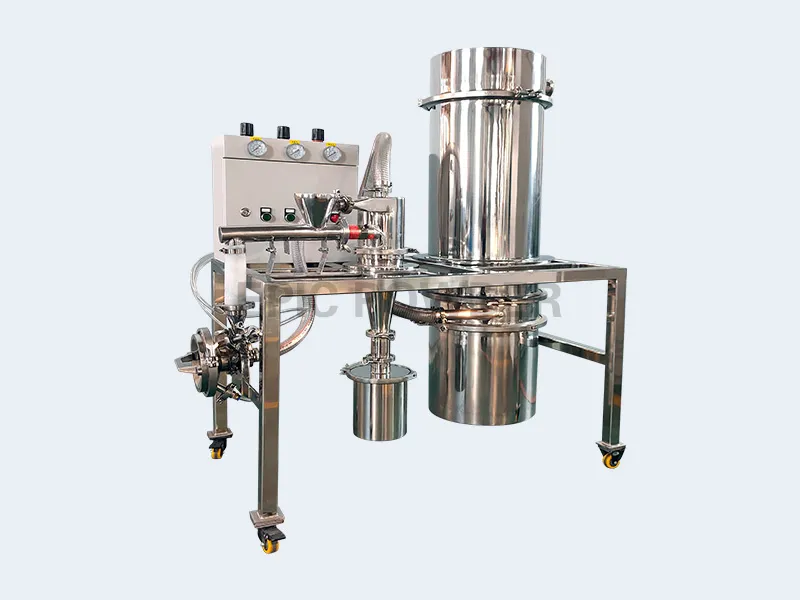
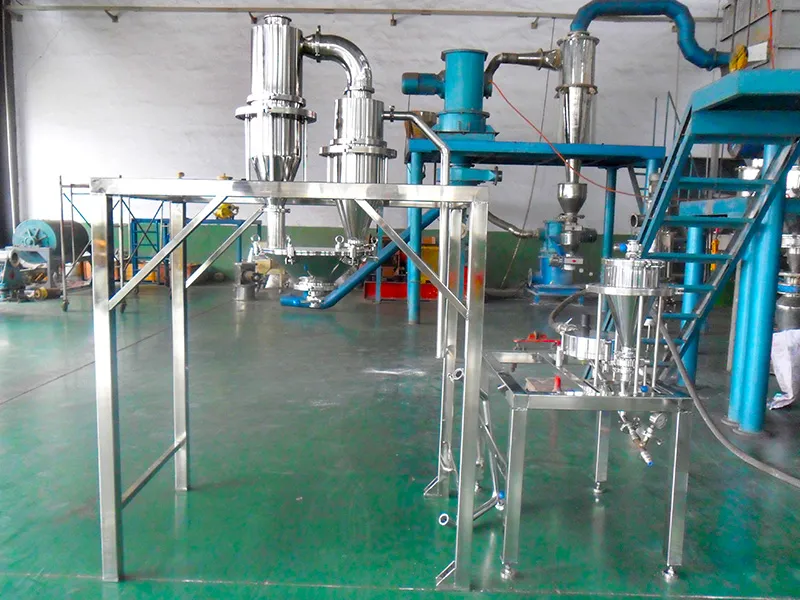
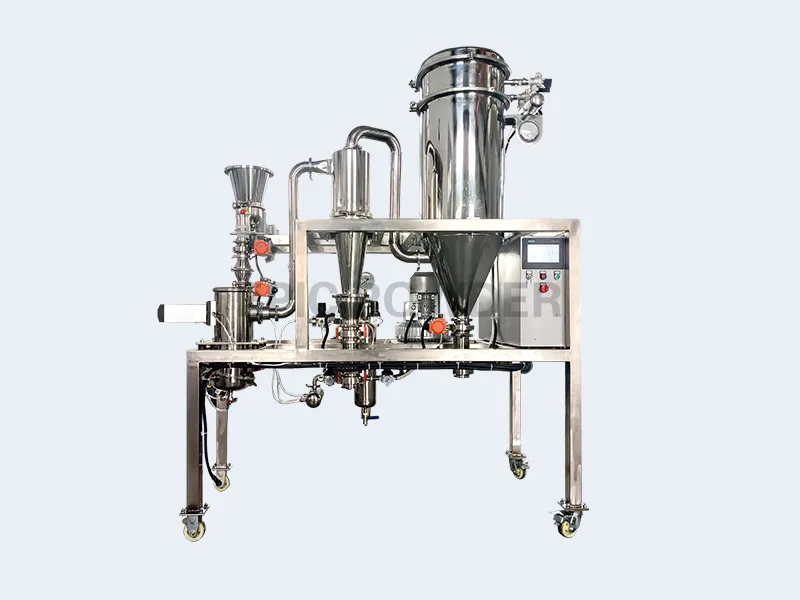
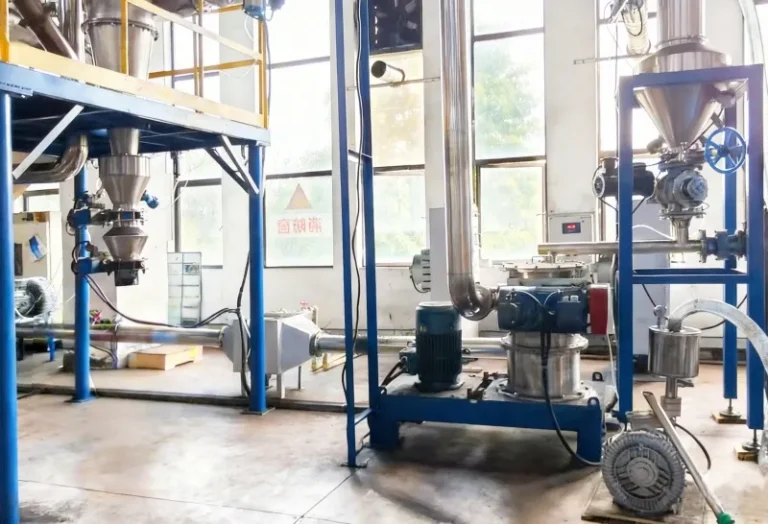
MQP disc jet mill, also known as spiral jet mill, the basic principle is: use the negative pressure generated by compressed air to suck the material in the hopper into the flat grinding chamber; The high-speed airflow (sonic speed or even supersonic speed) collides and crushes each other, and the materials that reach a certain particle size will approach the center of the grinding chamber due to the reduction of centripetal force, and will be discharged from the grinding chamber with the flow of airflow, and then enter the cyclone and dust collector.

Spiral Jet Mill - MQP
MQP-2

Product features

  • Without any rotating parts, CNC precision machining, no welding seam, easy to clean.
  • No medium grinding, the grinding chamber can be protected by stainless steel and wear-resistant ceramics to ensure product purity.
  • Low temperature grinding, especially suitable for grinding heat-sensitive, low-melting, sugar-containing and volatile materials.
  • The grinding process is extremely short, the crushing efficiency is high, and the over-grinding is less.
  • Suitable for grinding, dispersing and depolymerizing, and particle shaping of materials with various hardness.
  • The whole system is closed, without dust, low noise and easy to operate.

Jet Mill Working Principle

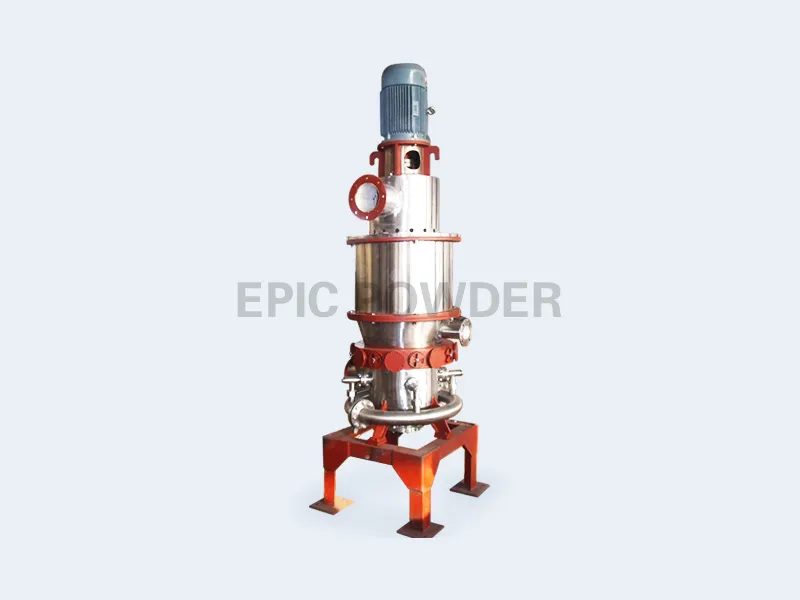
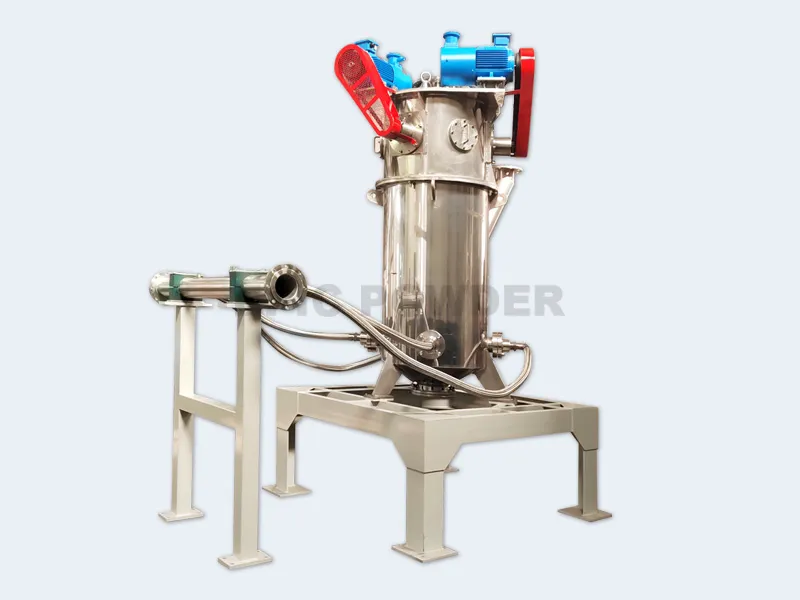
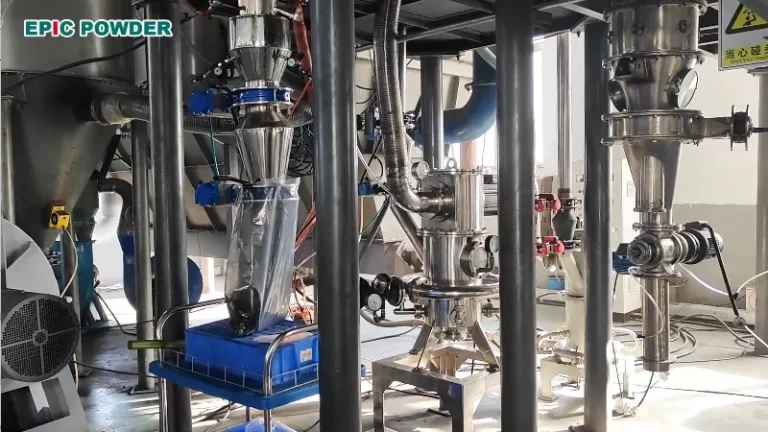
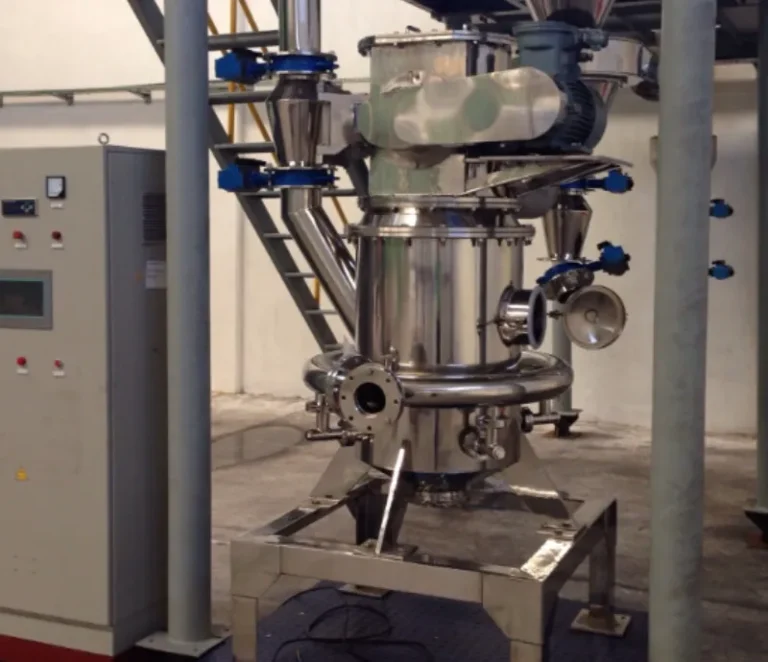
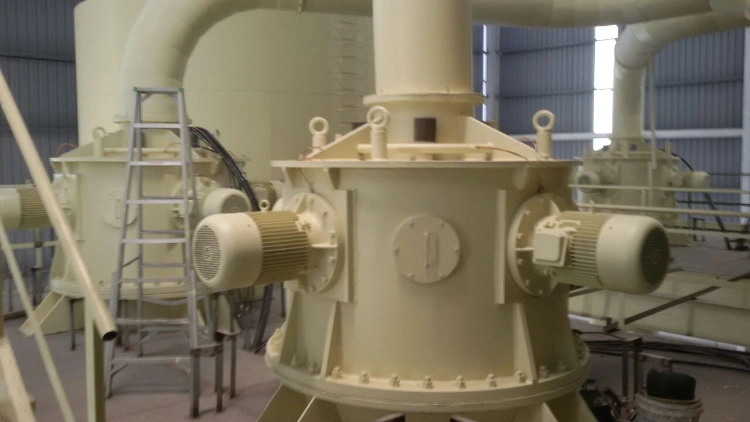
Fluidized Bed Opposed Air Jet Mill: After the compressed air is filtered and dried, it is sprayed into the grinding chamber at high speed through the Laval nozzle. At the intersection of multiple high-pressure airflows, the materials are repeatedly collided, rubbed, and sheared to be crushed. The crushed materials rise with the suction of the fan. The airflow moves to the classification zone. Under the action of the strong centrifugal force generated by the high-speed rotating classification turbine, the coarse and fine materials are separated. The fine particles that meet the particle size requirements enter the cyclone separator and dust collector through the classification wheel for collection, and the coarse particles descend to the crushing zone and continue to be crushed.

Jet Mill Product Parameters

MQP/MQW系列参数表 - 高性能气流粉碎机参数
Parameter / Model MQP01 MQP02 MQP03 MQP06 MQW10 MQW15 MQW20 MQW30 MQW40 MQW60
Feeding Size (mm) < 2 < 2 < 5 < 2 < 3 < 3 < 3 < 3 < 5 < 5
Particle size (D97:μm) 8~150 8~150 8~150 8~150 8~100 8~150 8~150 10~150 10~150 10~150
Production Capacity (kg/h) 5~15 5~100 10~200 20~400 50~800 150~1500 300~2000 150~1500 300~2000 300~2000
Air consumption (m³/min) 1 2.5 3 6 10 15 20 30 40 60
Air pressure (Mpa) 0.7~0.85 0.7~0.85 0.7~0.85 1.0~0.85 0.7~0.85 0.7~1.0 0.7~0.85 0.7~0.85 0.7~0.85 0.7~0.85

Note: The production capacity is closely related to the particle size, specific gravity, hardness, moisture and other indicators of the raw materials. The above is only for selection reference.

Jet Mill Product Related

Vertical Fluidized Bed Jet Mill - MQL
Horizontal Fluidized Bed Jet Mill - MQW
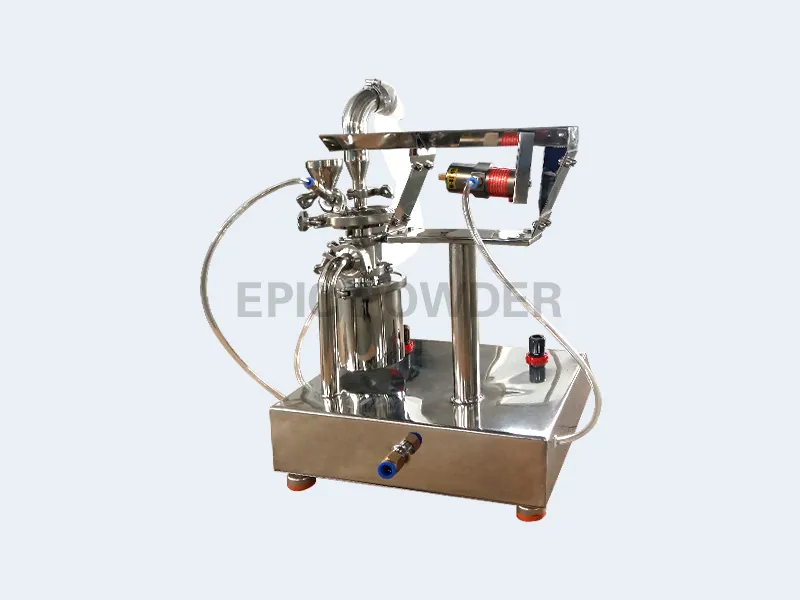
Three-in-one Laboratory Mill
Lab Spiral Jet Mill MQP - Lab

Answers to common jet milling-related questions

By working with a tolling partner’s technical team, you will gain efficiency. They will help choose the best mill type. They will also pick the right speed and feed rate. They will also cover any special project needs.

The team brings focused insights and extensive experience to the table. However, you should also expect to provide safety data sheets and answer a few questions, such as:

A jet mill is a type of ultrafine grinding equipment. It is a machine that uses a lot of energy. Therefore, the feed particle size of the air flow mill should be as fine as possible. It is recommended that the feed particle size be less than 80 mesh. Under normal circumstances, the feed particle size needs to be less than 1 mm.

Jet milling usually makes particles that are 1 to 10 microns in size. This is referred to as micronization.

Some product formulations require particles as small as 200 nanometers. The material's properties determine how small these sizes can be. You can make them smaller by increasing the mill's power. Additionally, by increasing the time the material spends in the milling chamber.

Some products require particles larger than 10 microns. This can be achieved by reducing the power to the mill or increasing the feed rate to the equipment.

In both circular and fluidized bed mills, jets of air or steam are made by gas. The gas is compressed to a gauge pressure of 50 to 120 psig. The most common gas used is commercially compressed air.

Superheated steam (392–980°F) is compressed to 100–220 psig. It can also be used on raw feed materials that are not heat-sensitive. Some of the other gases used include:

  • Nitrogen, which can protect materials from oxidation and/or fire

  • Argon, another inert option, though more expensive than nitrogen

  • Helium, used to achieve higher-velocity impact between particles

A great deal of energy is needed to create enough momentum to cause particles to break on impact. The compressor and nozzles turn high air pressure into energy. They do this within the mill. Large particles recirculate, and multiple high-velocity collisions progressively reduce their mass.

CONTACT OUR TEAM

Please fill in the form below.
Our experts will contact you within 6 hours to discuss your needs for machine and processes.

    Please prove you are human by selecting the tree