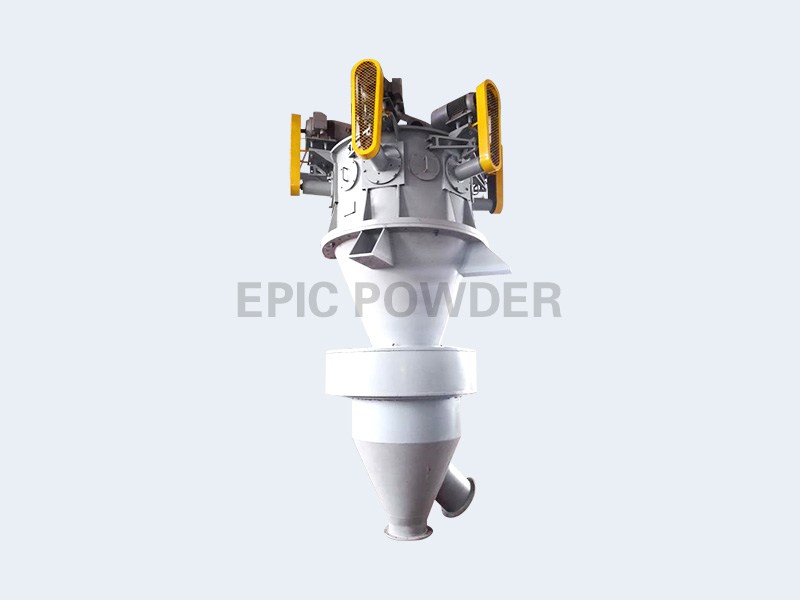
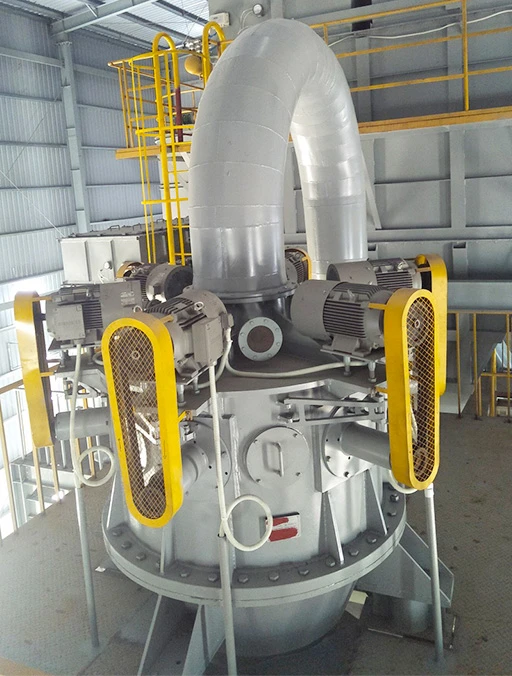
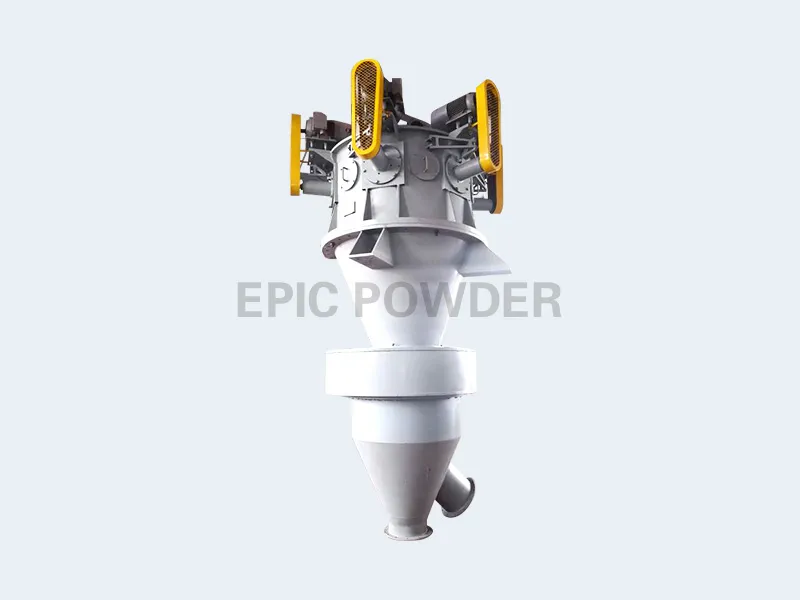
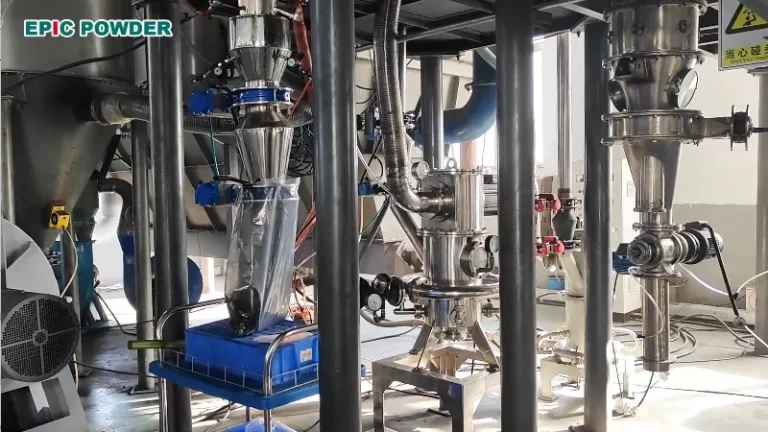
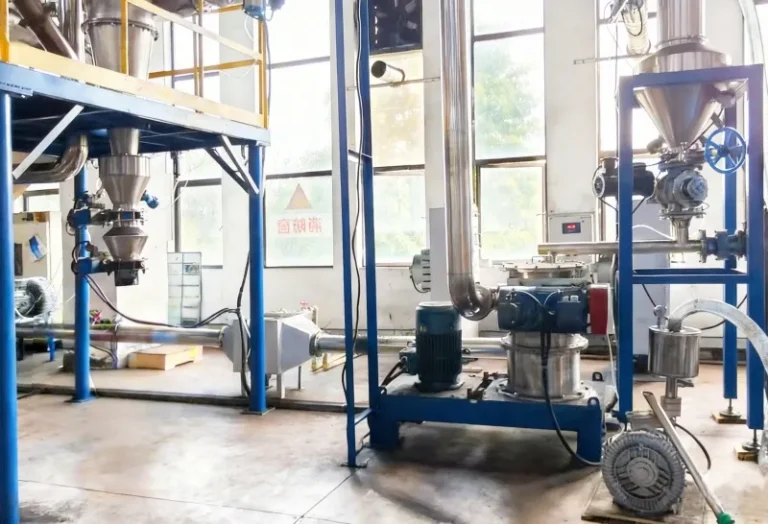
Гарызантальны паветраны класіфікатар - некалькі класіфікацыйных колаў
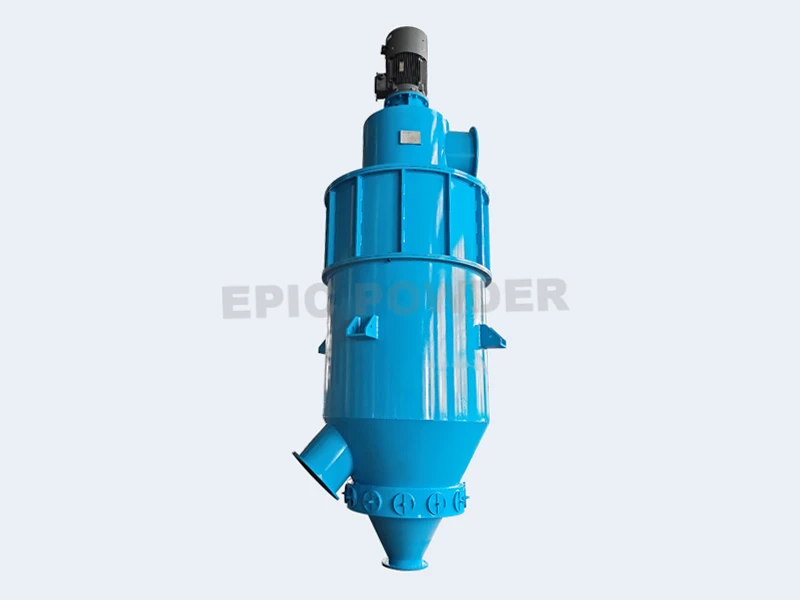
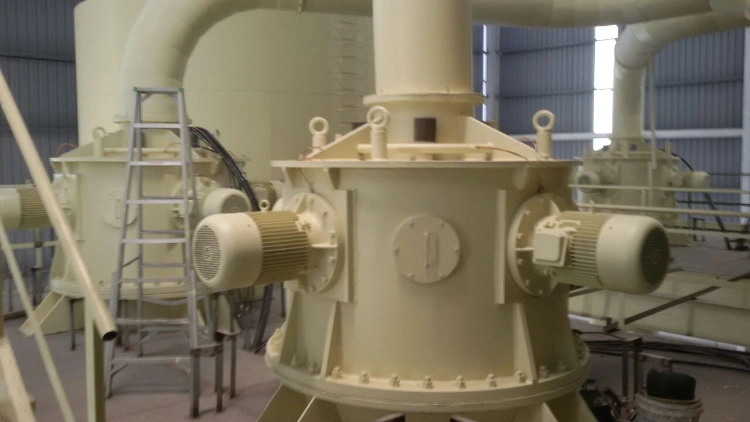
Under the action of the fan, the material moves to the classification area at a high speed from the lower inlet of the classifier with the updraft. Under the action of the strong centrifugal force generated by the high-speed rotating classification turbine, the material is separated, and the fine particles meeting the particle size requirements enter the cyclone separator or dust collector through the blade gap of the classification wheel for collection. The velocity of some fine particles entrained by coarse particles disappears after hitting the wall, and then decreases to the secondary air outlet along the wall of the cylinder. Through the strong washing effect of the secondary air, the coarse and fine particles are separated, the fine particles rise to the secondary classification in the classification area, and the coarse particles drop to the discharge port for discharge.
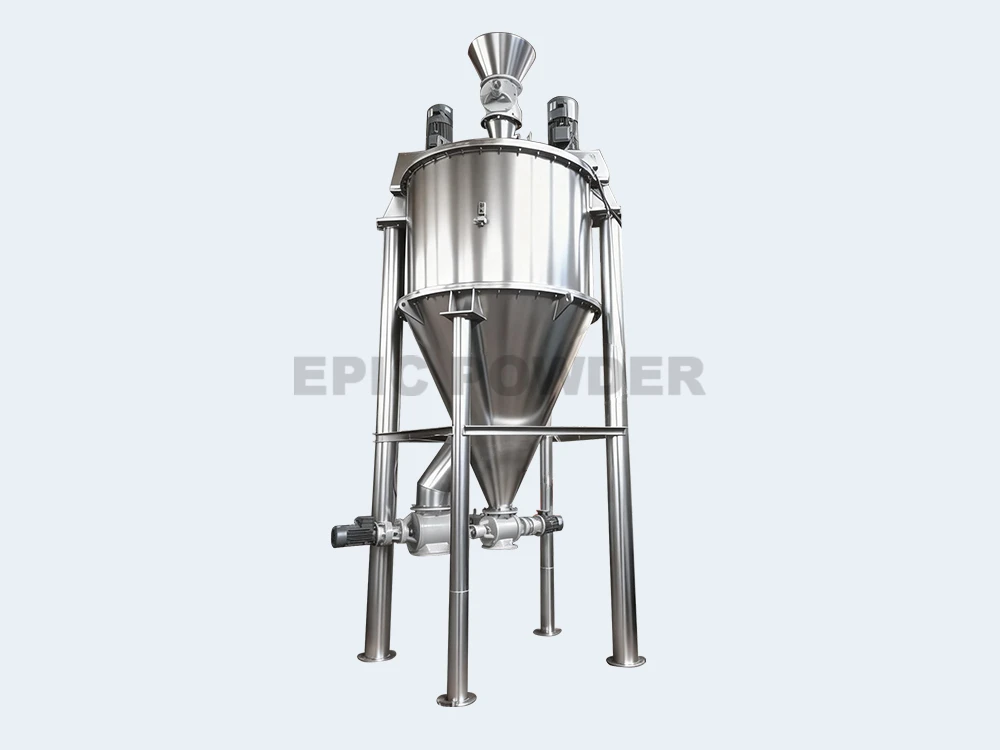
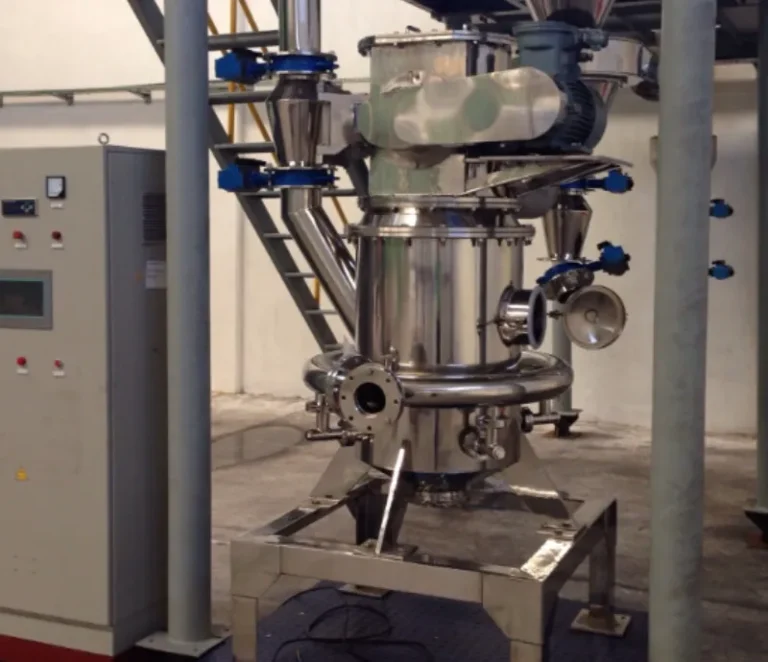
Гарызантальны паветраны класіфікатар - адзінае кола класіфікацыі
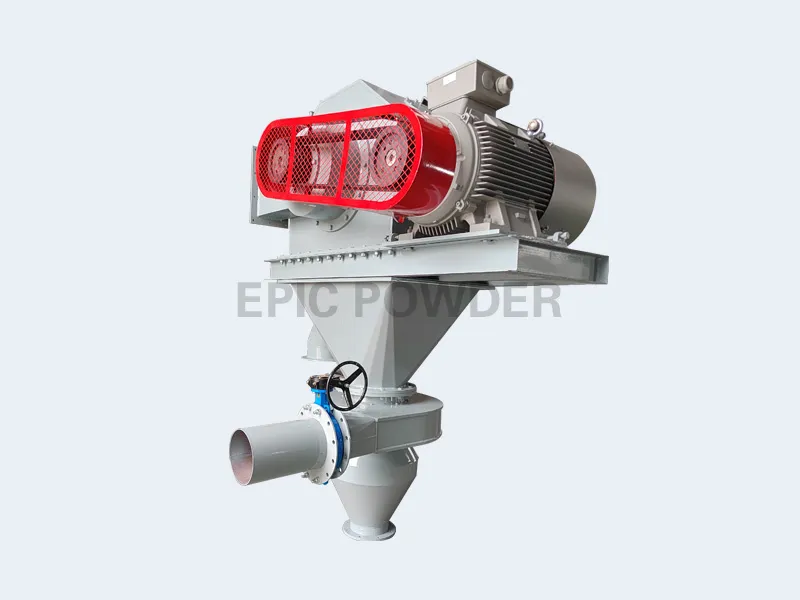
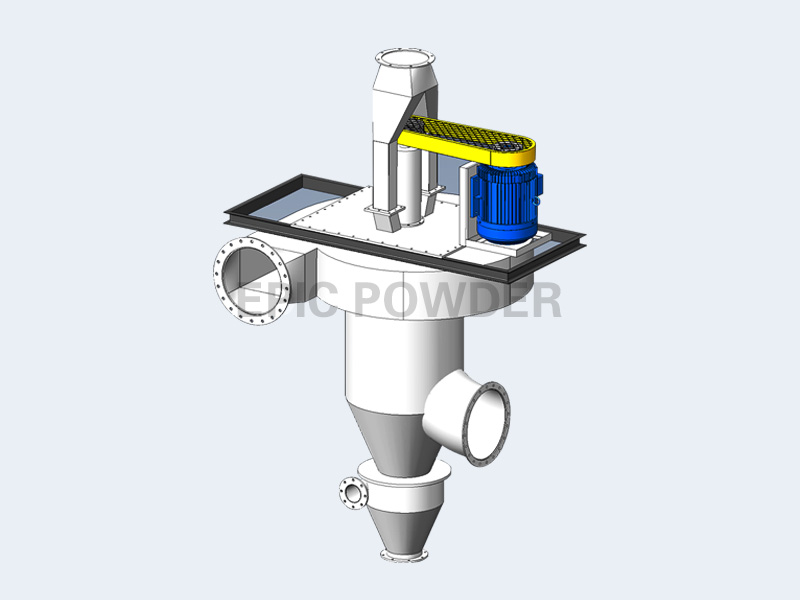
Класіфікатар і цыклонны сепаратар, пылазборнік і вентылятар утвараюць сістэму класіфікацыі. Пад дзеяннем вентылятарнага ўсмоктвання матэрыял перамяшчаецца з ніжняга ўваходу класіфікатара ў зону класіфікацыі з узыходзячым патокам паветра. Пад моцнай цэнтрабежнай сілай, якая ствараецца высакахуткаснай круцільнай турбінай, матэрыялы аддзяляюцца, і дробныя часціцы, якія адпавядаюць патрабаванням да памеру, праз шчыліну крыльчаткі класіфікатара ў цыклонны сепаратар або пылазборнік, буйныя часціцы, захопленыя часткай дробных часціц, сутыкаюцца. са сцяной, і хуткасць знікала, спускаючыся ўздоўж сценкі цыліндра да выхаду другаснага паветра, і грубыя і дробныя часціцы былі падзелены моцным прамывальным дзеяннем другаснага паветра. Дробныя часціцы падымаюцца ў зону класіфікацыі для другаснай класіфікацыі, а буйныя часціцы апускаюцца ў адтуліну разраду для разрадкі.
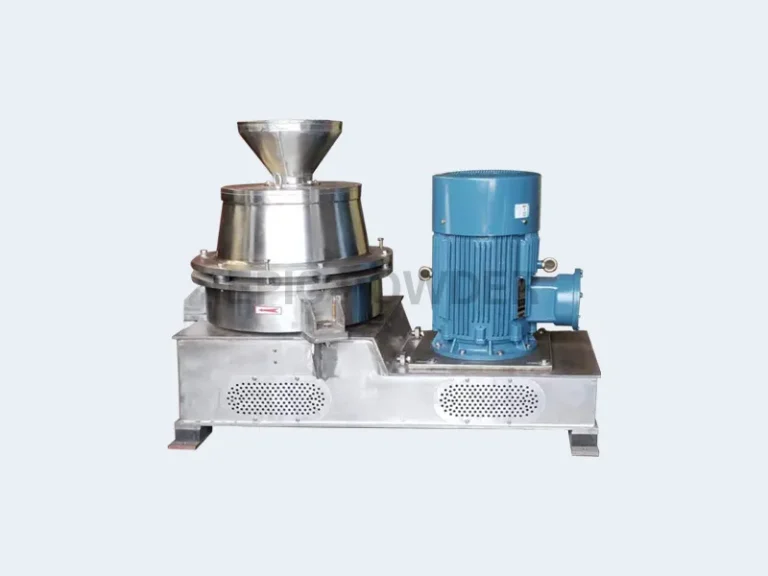
HTS series airflow classifier is designed by our German classifier experts, specially used for efficient dry classification of d97 3 microns – d97 45 microns and other ultra-fine powders. Its most critical component is its internal grading rotor that can rotate at high speed, and the grading rotor is installed horizontally. The classifier, cyclone collector, dust collector and induced draft fan form a complete classification system. Under the gravitational force of the induced draft fan, the material quickly enters the classification cavity from the inlet of the classifier with the airflow of the fan; the classifying rotor rotating at high speed generates a strong centrifugal force to block the coarse particles, so that the coarse particles cannot pass through the gap between the blades of the classification wheel At the same time, the gravity of the fan partially overcomes the centrifugal force and sucks away the fine powder. The fine powder passes through the gap between the blades of the classifying wheel and enters the cyclone collector or directly enters the dust collector, thus achieving the purpose of separating coarse and fine materials. Coarse particles entrain some fine particles and lose speed after hitting the wall, and descend to the secondary tuyere along the cylinder wall. After the strong elutriation and dispersion of the secondary air, the coarse and fine particles are further separated, and the fine particles rise to the classification area for secondary classification. The particles descend to the discharge port for discharge, or are sent back to the crushing equipment for further crushing and grinding.
Адзінае кола класіфікацыі
Гарызантальна ўсталяваны ступеністы ротар, лінейная хуткасць можа дасягаць 100 м/с;
Хуткасць ротара можна рэгуляваць шляхам пераўтварэння частоты, а размеркаванне сілы можна гнутка рэгуляваць;
Падыходзіць для дакладнай класіфікацыі сухога мікроннага матэрыялу;
Даступны D50: 1,5-25 мкм.
Кола некалькіх класіфікацый
Дыяметр ротара складае 315-630 мм і 2-6 ротараў, якія выкарыстоўваюцца для класіфікацыі звыштонкага парашка;
Кола класіфікацыі павялічвае прастору для класіфікацыі ў верхняй частцы сіласу;
Кіраванне інвертар, рэгуляваная хуткасць;
Больш высокая прадукцыйнасць, чым з адным ротарам.
Параметры прадукту
Тэхнічныя параметры адзінага класіфікацыйнага кола
Параметр / мадэль
70
100
140
200
260
315
400
500
630
750
1000
Particle size (D97:µm)
5-100
3-100
3-120
3-120
3-150
3-150
4-150
5-150
6-150
6-150
15-150
Classification efficiency (η)
60~80%
60~80%
60~80%
60~80%
60~80%
60~80%
60~80%
60~80%
60~80%
60~80%
60~80%
Classifier motor (kW)
2.2
3
4
7.5
11
15/18.5
18.5/22
22/30
30/45
37/55
45/75
Air volume (m³/h)
150
300
600
1200
2000
3500
5600
8800
14000
20000
35000
Заўвага: вытворчая магутнасць цесна залежыць ад памеру часціц, удзельнай вагі, цвёрдасці, вільготнасці і іншых паказчыкаў сыравіны. Вышэй прыведзена толькі для даведкі аб выбары.
Тэхнічныя параметры некалькіх класіфікацыйных колаў
Параметр / мадэль
70
100
140
200
260
315
400
500
630
750
1000
Particle size (D97:µm)
5-100
3-100
3-120
3-120
3-150
3-150
4-150
5-150
6-150
6-150
15-150
Classification efficiency (η)
60~80%
60~80%
60~80%
60~80%
60~80%
60~80%
60~80%
60~80%
60~80%
60~80%
60~80%
Classifier motor (kW)
2.2
3
4
7.5
11
15/18.5
18.5/22
22/30
30/45
37/55
45/75
Air volume (m³/h)
150
300
600
1200
2000
3500
5600
8800
14000
20000
35000
Заўвага: вытворчая магутнасць цесна залежыць ад памеру часціц, удзельнай вагі, цвёрдасці, вільготнасці і іншых паказчыкаў сыравіны. Вышэй прыведзена толькі для даведкі аб выбары.